
LOFOTEN · ROOTED IN THE SEA
The fish that
built Norway.
A winter migration. A coastal livelihood. A connection that reached far beyond the islands.
THE RETURN OF SKREI
The season starts
beneath the surface.
The fishing story of Lofoten begins with a journey. Northeast Arctic cod spend much of their lives in the Barents Sea before migrating towards the Norwegian coast to spawn. The waters around Lofoten and Vesterålen are important spawning grounds.
This seasonal return helped shape the rhythm of coastal life. The catch brought work, and the work brought people: fishermen, traders and the communities needed to support them.
WIND, AIR & TIME
A catch that
could travel.
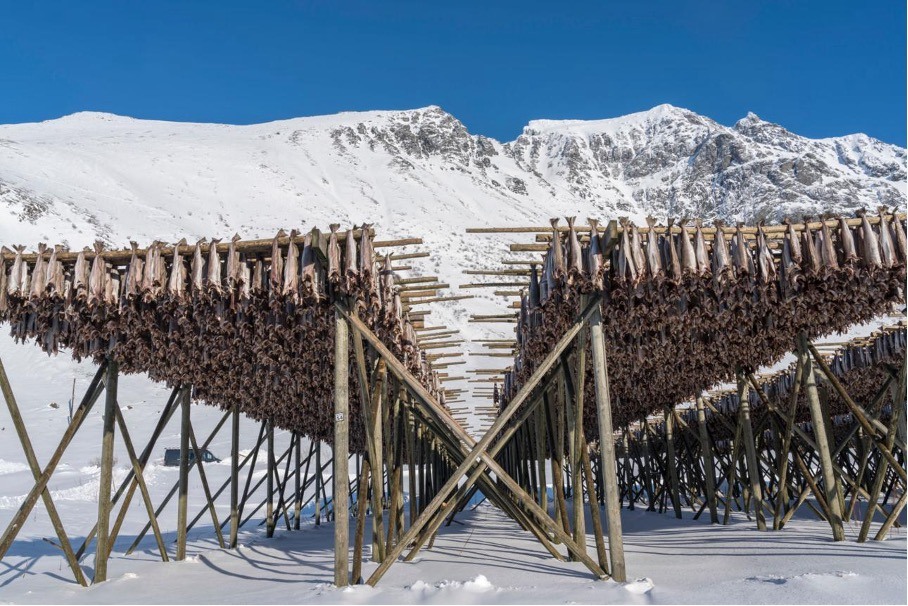
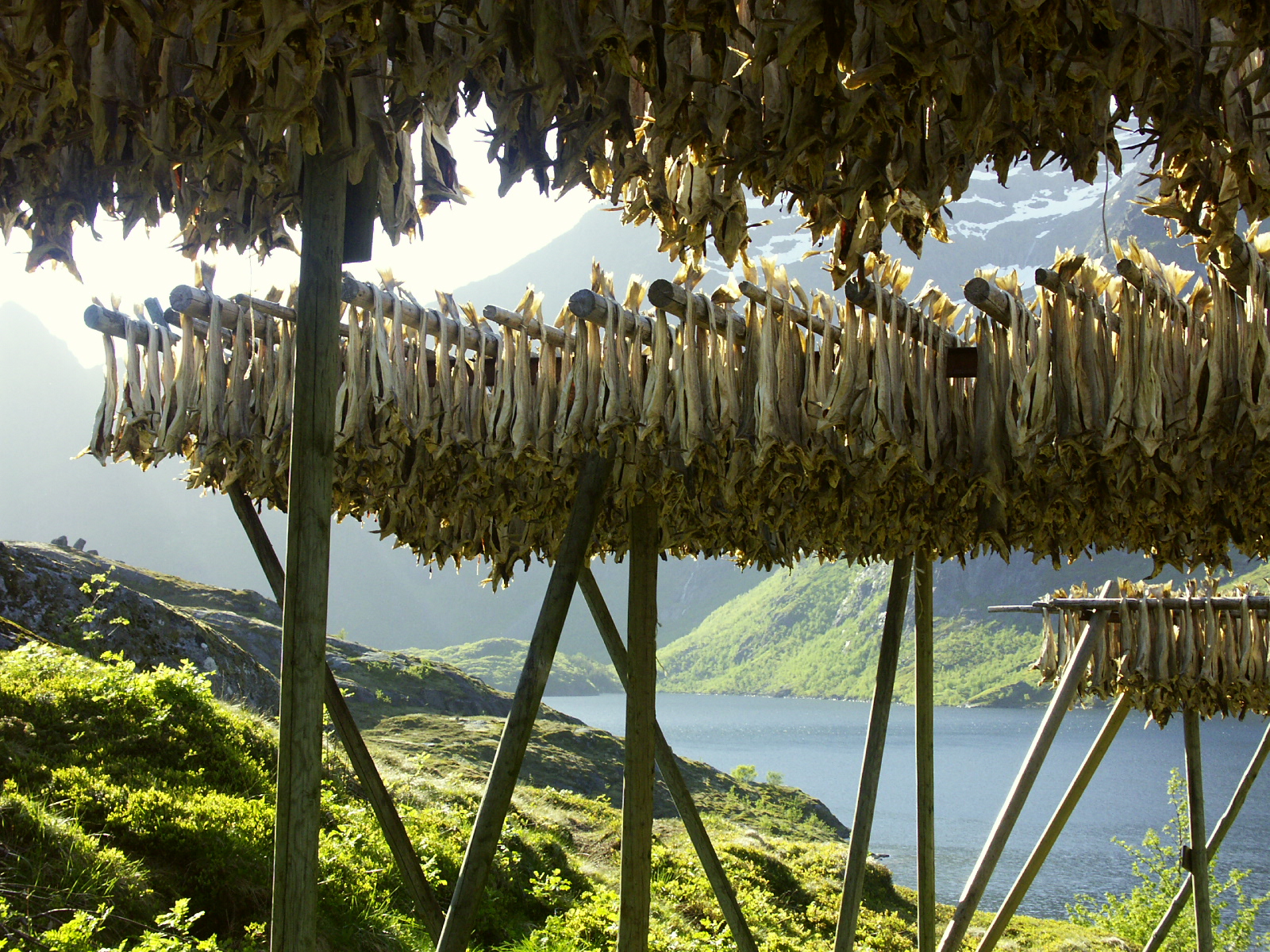
Fresh fish has a short life. Drying changed what could be done with it. Hung on wooden racks in the coastal air, cod became stockfish: a preserved product that could travel beyond the fishing grounds.
That trade connected northern communities with markets elsewhere in Europe. Its influence reached beyond the harbour, helping to shape the coastal economy and the lives of the communities around it.
THE PEOPLE BEHIND THE CATCH
Look beyond
the drying racks.
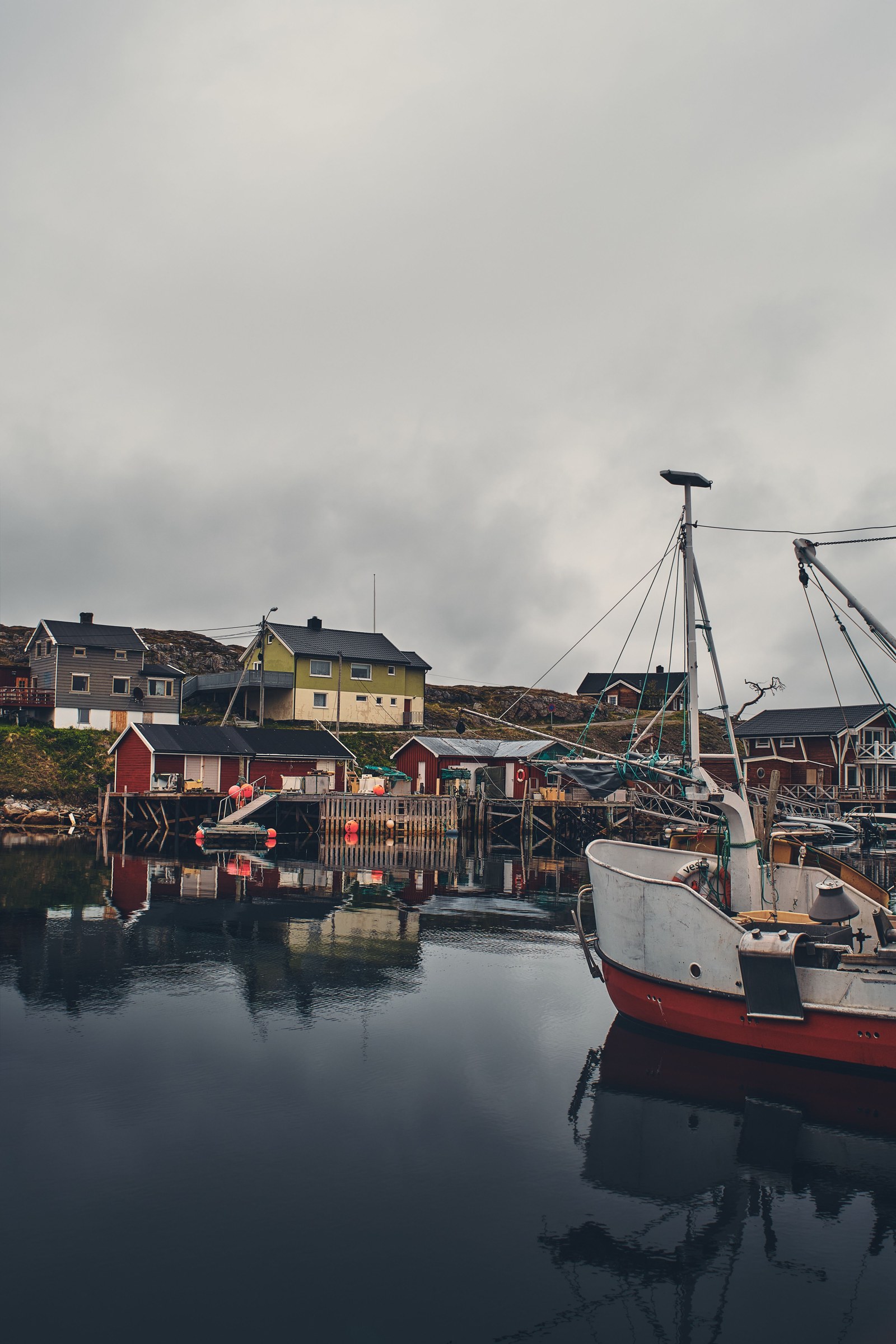
The racks are striking, but the story also belongs to the people who worked at sea and on shore. Boats, cabins, tools and trading buildings show how much organisation lay behind a seasonal catch.
At Lofoten Museum in Storvågan, those details give the wider history a human scale. Seeing the buildings and boats can make the coast around you easier to read.
Background: Institute of Marine Research: Northeast Arctic cod and Lofoten Museum.
Additional photography: Davide Nalesso and Marco Allasio / Pexels. Illustrative fishing photographs.